
How to Search the Albany Court Docket
The citation, city court notice, or case number tells you where to begin. Read it for the court name, the appearance date, the citation number, and any plea or payment instruction. Albany Municipal Court works with a wide range of matters: city ordinances, misdemeanors, state traffic offenses, DUI, underage alcohol, marijuana under one ounce, firearms violations, nuisance and abatement issues, and animal-control citations. For the public calendar, the city's Courtware calendar is the main path.
Nothing showing on the city calendar? Call Albany Municipal Court at 229-431-2865. A case that belongs to Dougherty State or Superior Court runs through the county Tyler search instead. The two courthouses sit close together in downtown Albany, but their case systems never merge. Keep the issuing authority and the citation number with you at every step.
- Confirm that Albany Municipal Court is the issuing or hearing court.
- Open Courtware and search or filter by the citation, case, or court-date fields available.
- Read Court Date/Time, Court Date Type, violation, and payment-link information together.
- Call the city court when the row is red, missing, old, or unclear.
- If no city match exists, run the county search for the county court named on the notice.
Albany Courtware's Live Calendar
Courtware is a public, row-based municipal calendar. The interface offers a filter row, columns you can sort or group, pagination, and a Payment Link field when a vendor path exists. Red marks a required court appearance, the city says. That cue is local guidance only. It is not a certified disposition, and it never replaces the court's own instruction.
The official Albany Courtware calendar holds the city's table. Check it before treating a missing county Tyler result as proof that no case exists.
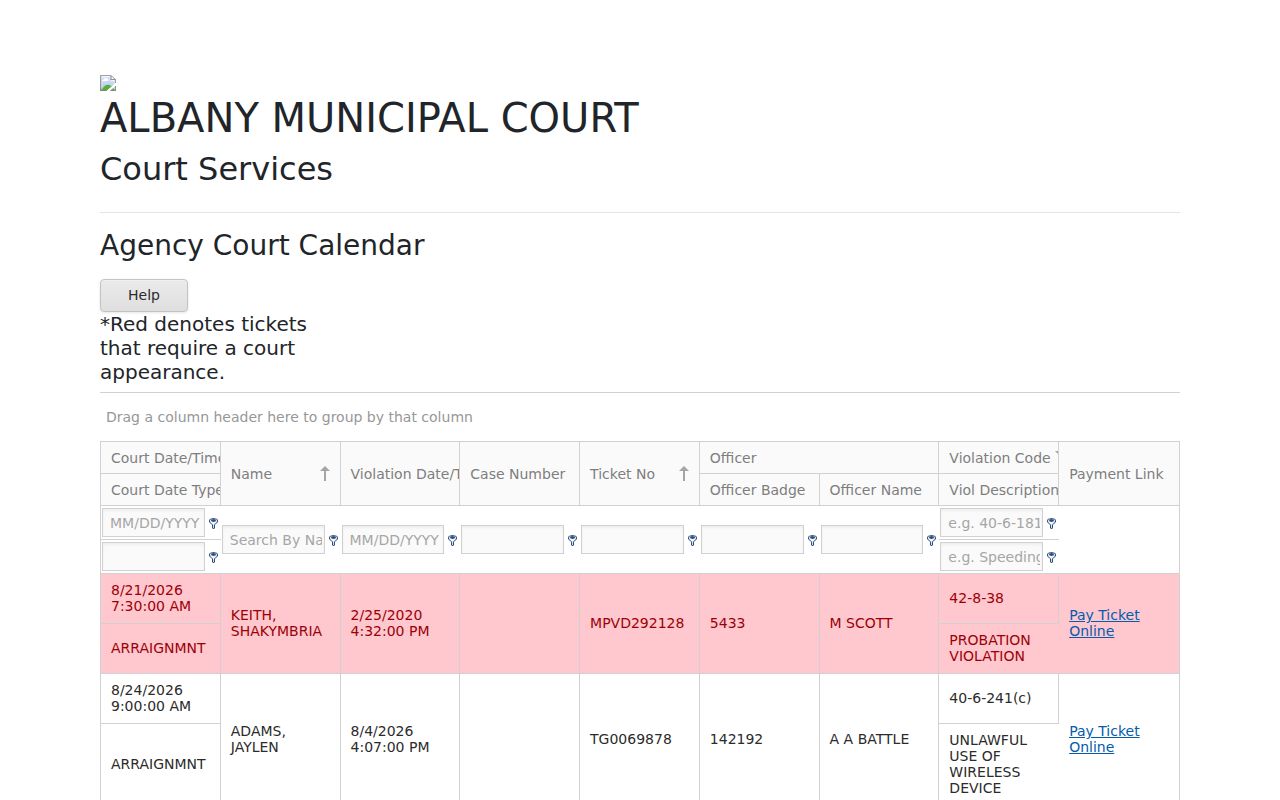
Turn to the city court office. The live table or its payment link can leave a question open. Courtware can show a large set of rows and page controls. It stays a current calendar view, though, rather than a complete archive of every city filing. Don't treat it as the full city record. Save the ticket number and court date. Both details make any later call or follow-up with the clerk far easier.
The Albany Municipal Court
Albany Municipal Court is a limited-jurisdiction city court. Its docket covers city ordinances, misdemeanors, state traffic offenses, DUI, and other categories the city lists. The split matters for a docket search. This is not the Dougherty Superior or State Court docket. Even when the charge is a state traffic offense, a city citation starts with the city's calendar and records office.
The city court page names the chief judge. That is Chief Municipal Court Judge Ingrid P. Driskell, appointed January 29, 2025. It also posts the court's schedule and payment policy. When a general calendar description clashes with a separate FAQ or an older instruction, trust the current city page or a phone confirmation.
The official Albany Municipal Court page sets out the court's jurisdiction and contact details. It is the city's own source for both.
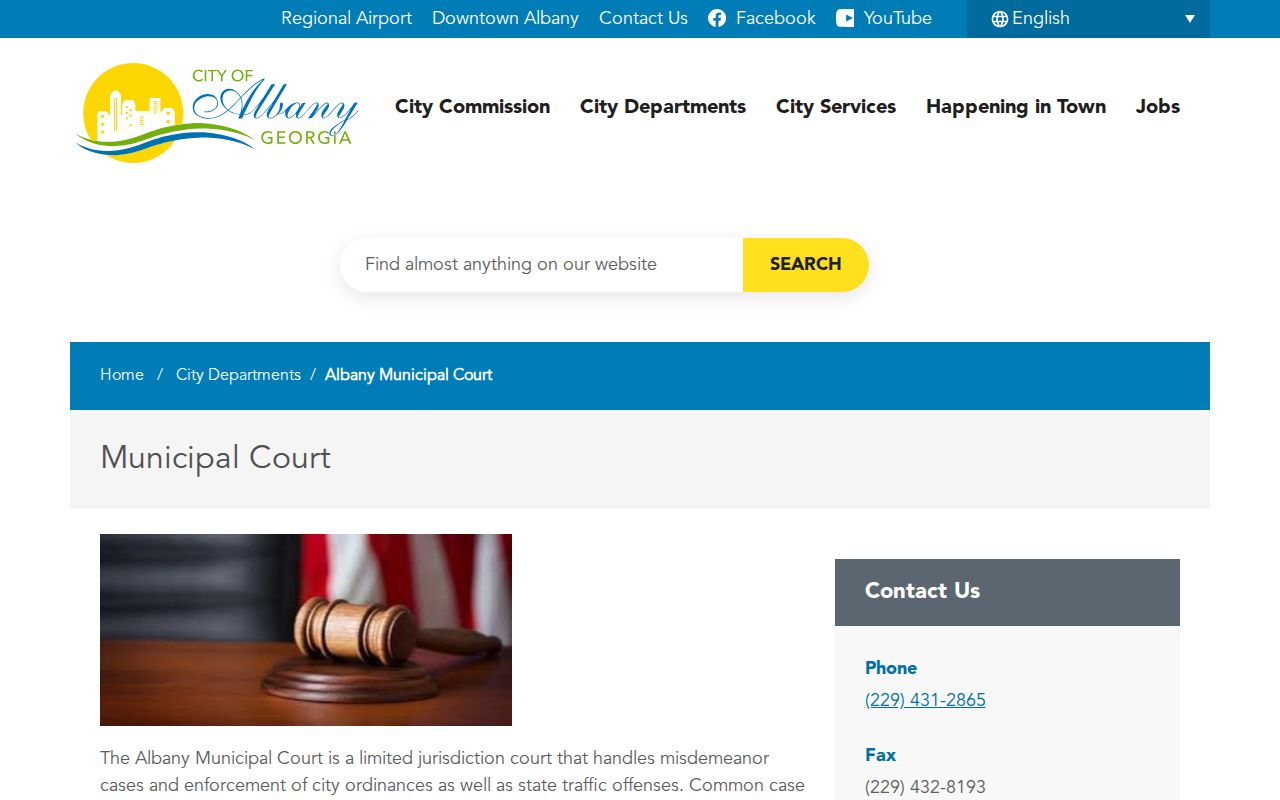
The municipal office keeps the city docket, the calendar, and the payment instructions. That makes it the working custodian for Albany court records. Albany wears two hats. It is the Dougherty County seat. It is also the only incorporated municipality named in the county's official plan. The 2020 incorporated-place population is 69,647. That city figure stands apart from the county-wide population estimate.
Albany Payment Office and Hearings
Albany's administrative and payment office sits in the Albany Dougherty Tax Building, 240 Pine Avenue, Room 150, Albany, Georgia 31702. Mail goes to P.O. Box 447, Albany, GA 31702-0447. The city lists phone 229-431-2865, fax 229-432-8193, and email coamunicipalcourt@albanyga.gov. Walk-in payments run 8:30 a.m. to 4:30 p.m., Monday through Friday. Bring the citation number with you.
Hearings happen elsewhere. In-custody arraignments take place at the Dougherty County Jail at 7:30 a.m. on Monday, Wednesday, and Friday. Arraignments and bench trials move to the Albany Law Enforcement Center, 201 W. Oglethorpe Boulevard, on Monday, Wednesday, Thursday, and Friday, starting at 9 a.m. or after jail arraignments. The schedule is layered. The current Municipal Court page lists animal-control and nuisance-abatement dockets on the fourth Friday each month, though a separate city FAQ gives a different nuisance schedule. Confirm with the court.
This split helps when a calendar row and a payment notice point to two different places. The payment counter handles money. The hearing site handles the appearance. When a Courtware location or court-date label looks off as a hearing nears, check it against the current city notice. The city court's phone line is the safest tiebreaker.
Albany Court Dates and Settings
Courtware's Court Date/Time and Court Date Type fields tell you what a city setting means. Match the Case Number or Ticket No against your citation. Under the interface notice, a red row means you must appear in court. A payment link never erases a printed appearance instruction. Is the row old, red, or unclear? Then call the city court before that date arrives.
| Date and time | Scheduled municipal setting shown in Courtware's Court Date/Time field. |
|---|---|
| Case or ticket number | Identifier used to match a citation or case to the row. |
| Court Date Type | Local setting label, including an observed ARR AIGNMNT-style value. |
| Violation | Violation Code and Violation Description fields. |
| Appearance signal | Red row notice indicating a ticket requires court appearance. |
Albany Calendar and Court Locations
The city's calendar page offers two tools. One is an annual master calendar, handy for spotting regular Albany Municipal Court blocks. The other is the live Courtware table, with rows and filters you can work through. Treat both as scheduling aids rather than a certified court file. Hearings sometimes happen at the Law Enforcement Center. Some happen at the jail. Payments and records still go through 240 Pine Avenue.
The official Albany calendar and location page spells this out. It separates payments and record requests. Those differ from where a hearing may actually sit.
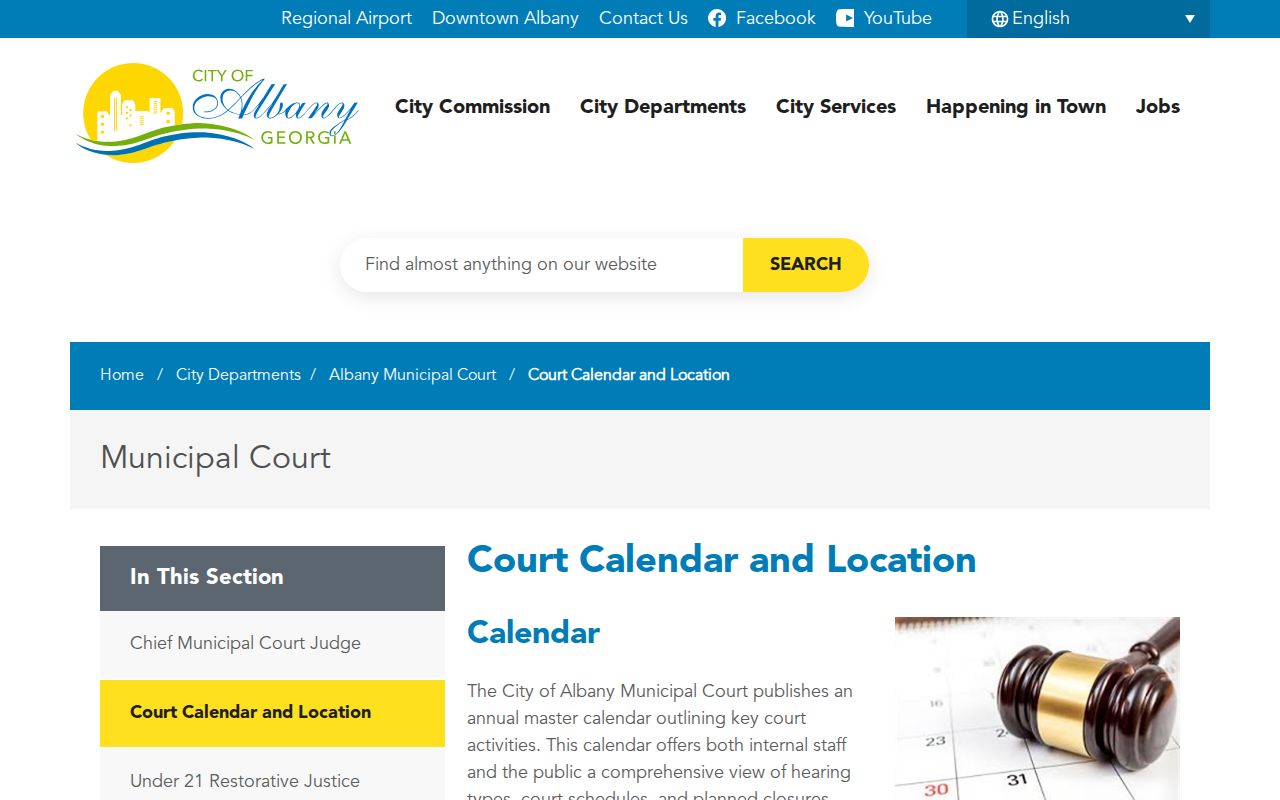
A cached calendar block can mislead you. If a date or location looks off, confirm with the city court directly.
Albany Traffic Tickets
Albany Municipal Court hears city traffic matters along with state traffic offenses written inside the city. Your citation prints the court, the citation number, the appearance date, and payment or plea instructions. Read it first. Georgia runs no central traffic-citation database. So the Courtware path or a call to the city office is the way in. A ticket written outside city limits may belong to the county or State court instead.
Payments go by credit or debit card in person, online, or by phone at 678-359-2783. Money orders and cashier's checks work too. Personal checks do not. The city publishes no universal reduced-fine, contest, deferred-disposition, or online deadline. The citation and the court's confirmation control.
Albany City Tickets Stay Separate
Albany Police's official FAQ sends city tickets to the City Treasurer's Office. That office sits at 240 Pine Avenue. County and state tickets go instead to the Dougherty County Sheriff's Office at 225 Pine Avenue. That office has its own payment instructions. The split is operational, and it matters. Which office holds the record, and which portal serves it, depends on who issued the ticket. A city ticket does not land in Tyler just because it cites a state traffic statute. Albany's city record starts at the city office.
For a city citation, use Courtware, the Municipal Court phone line, or the city open-records route. For a county or State citation, go through the issuing court and the county traffic or case search. Get the right court first. Georgia's traffic guidance allows 7 to 21 business days for an online appearance after issuance. But the date printed on an Albany citation still governs when you must contact the court.
Where Albany Cases End Up
Albany Municipal Court handles the city tier of cases. Matters that arise in Albany but belong to a county-level court follow that court's own system. Superior Court takes felonies, divorces, land-title and equity disputes, and major civil subjects. State Court covers misdemeanors plus concurrent civil jurisdiction. Magistrate Court handles warrants, small claims, dispossessory, garnishment, and related lower-court matters.
Docket flow: Albany Municipal Court › Dougherty County Courts › Superior Court of Dougherty County
This routing map makes no promise that every city matter becomes a county case. An Albany city matter stays in the city system unless a lawful appeal or a separate county filing creates a county record. For county-level detail, see the Dougherty County court docket overview or the relevant county record page.
Albany Disposition Copies
Need a disposition copy? Albany Police's official FAQ says court-case and citation dispositions are available at the Police Department Main Desk, 201 W. Oglethorpe Boulevard. Desk hours are 8 a.m. to 4 p.m. Monday through Friday. The fee is $3. You must show a driver's license, state ID, or military ID. Keep in mind the city court and police desk are different counters from the county Clerk. Call ahead to confirm the current route.
The official Albany Police FAQ covers the city disposition-copy fallback. It also covers the split between city and county payment routing.
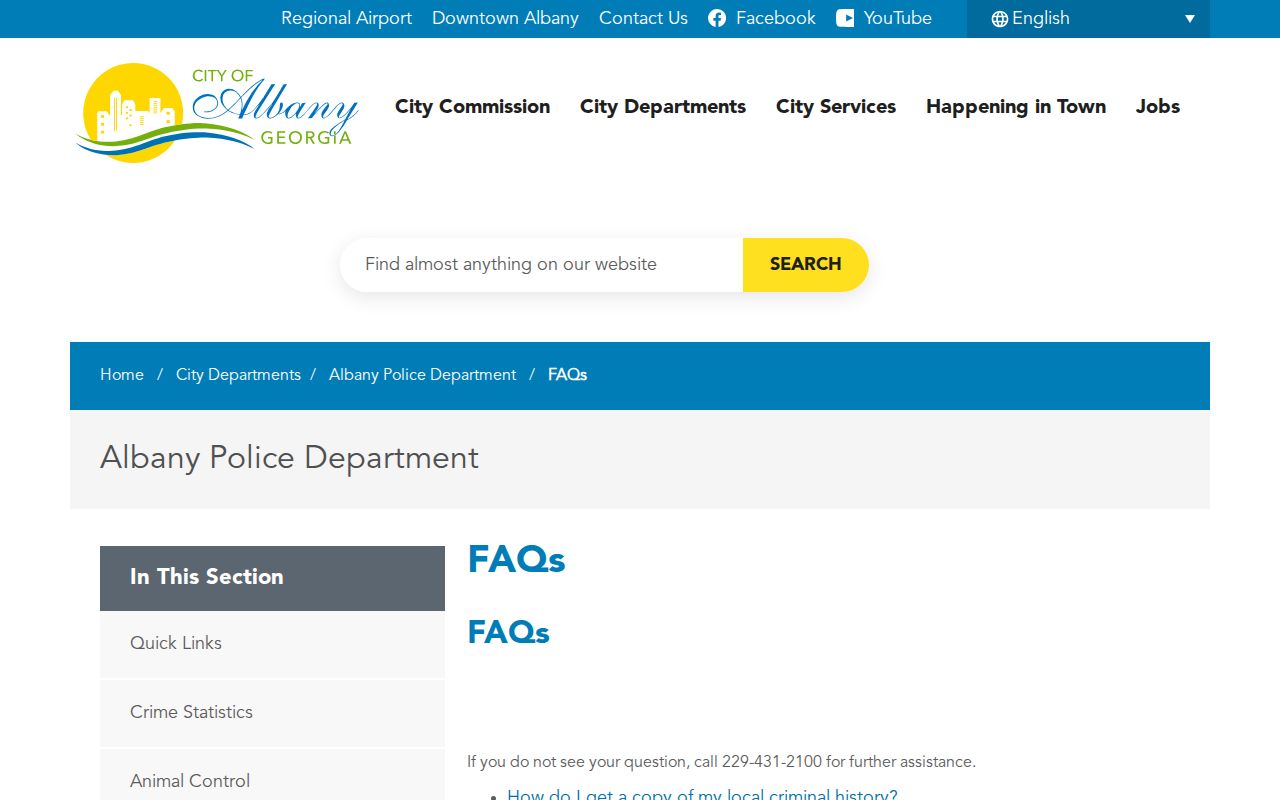
A city disposition copy is a municipal record product. It is not a certified county court file.
Public Access to Albany Court Records
Albany Municipal Court links a city open-records request path. It also posts its own calendar and records contacts. The Georgia Open Records Act, O.C.G.A. § 50-18-70 et seq., governs public agency records. Court records, though, may follow the court's own procedure. Filing an open-records request with the city guarantees neither a certified copy nor access to material restricted by law or court order.
Ask the Municipal Court about the exact citation, disposition, case record, or calendar item. City records can hold protected personal information. They can also hold sealed material, or a document needing a court-specific decision. Never publish private identifiers you spot in a public row. The city open-records link can route a request. But the court office remains the place to confirm whether a court-file copy exists and whether certification is required.
Albany access rule: Courtware can help locate a city setting, but the Municipal Court or its authorized records office supplies the official or certified record.
Albany Red-Speed and Under-21 Workflows
Albany runs a school-zone red-speed program of its own. The affidavit that comes with it is a city traffic form. Expect fields for a Notice of Violation number, the vehicle plate and its state, and a sworn statement that you were not the driver. You will also find a Respond By date. There is a notary block, and the Public Safety Initiative mailing address. Treat the form as written. It is city business. It never folds a camera notice into the county's Tyler docket.
The city's under-21 pamphlet works the same way. It lists documents that may be due before the date on an order. Examples include proof of a valid license and a DDS-approved six-hour defensive-driving course with its stated administrative fee. Whatever the current court order and Municipal Court say controls. A blocked online vendor does not erase that instruction.
What if the payment path is down? Call 229-431-2865, or use the city counter and the open-records route. If the case actually sits in a county court, take it to the county office. Do not keep repeating a city docket search. A Courtware row, a disposition copy, and a certified county record are three different products. Ask for the exact document or court date you need.