
How to Search Criminal Dockets
Dougherty's Tyler party search is the easiest place to begin when you have a name. Type the last name first. Skip any suffix, and use at least two letters. Pick SU or ST before you choose a criminal division. If you already know the court code, the four-digit year, and the numeric sequence, a case-number search will beat a name search for precision. The Case Type filter, CR Criminal, works best as an extra screen on top of court and division. Never use it in place of them.
Court codes matter here. R means Superior felony. SR is State misdemeanor, SW covers State misdemeanor warrants, and ST is State traffic. Magistrate warrants and misdemeanor citations sit in their own MG divisions. Albany Municipal Court keeps city cases in Courtware, a separate records system. Juvenile matters run through a restricted court system. They are no public substitute for the adult Tyler search.
- Identify the court and likely division before entering the name.
- Search Party, Associated Party, or Case Number with the narrowest known details.
- Add a filing date range or Active/Inactive status when the result is broad.
- Open the case view and compare Offenses with Proceedings.
- Call the Clerk at 229-431-2198 when the case, document, or setting is unclear.
Dougherty County Criminal Felony Search
Felony trials in Dougherty County belong exclusively to Superior Court. In the Tyler selector, SU is the Superior Court code. The R division means Felony. WT Warrants, SW Search Warrants, and DW Dismissed Warrants also appear as Superior choices. Treat those labels as routing tools. They are not statements about what happened in any particular case.
The Party form gives you Court Code, a Court Division list, filing-date fields, case status, and Search or Clear buttons. The Division list adjusts as you choose. A common surname will hit the portal's result limit fast. Narrow it down. Case Number search works well when you know the local construction. That is court code, division, year, then a six-digit sequence. That pattern applies to both civil and criminal Superior matters.
The link goes to the official Dougherty party search form. There you can select the criminal court path from the county's own fields. No party record is published.
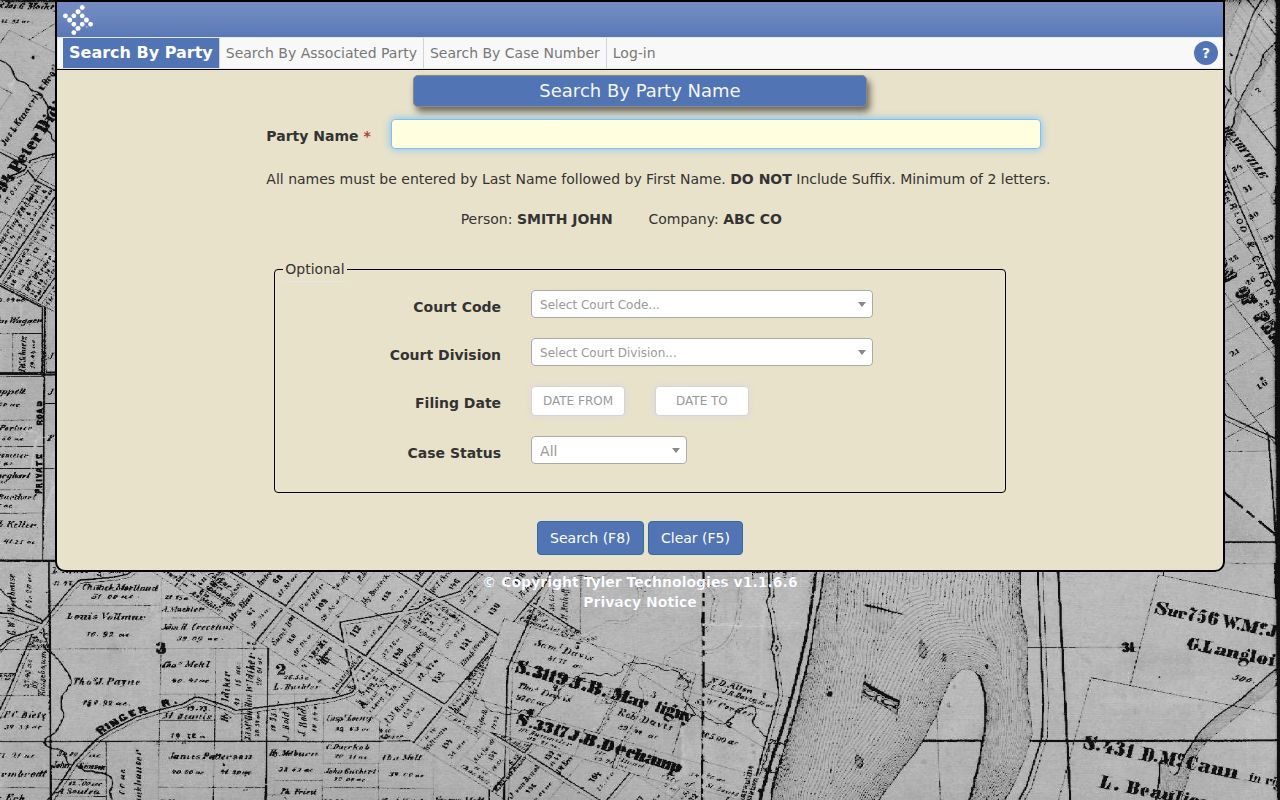
Picking the right court and division on the form will get you further than a broad name query alone.
What a Criminal Docket Shows
Open a case in the public Tyler view. You get an overview with Case Number, Active, Judge, Filing Date, Filling Time, Close Date, and Remarks. The Parties and Associated Parties tabs carry local role fields. The offense block can list Offense, Statute, Reduced Statute, Reduced Statute Description, GCIC Count, Count, and Party Name. Under Proceedings you will find Code, Description, Filing Date, Party Name, Offense, Comments, and View.
So a criminal docket is far more than a charge label. The offense block tells you what the portal recorded. Proceedings tracks the activity over time. One party-table field reads "Convicted Felon." That field by itself does not settle the current disposition. Need a conviction, dismissal, acquittal, nolle prosequi, sentence, or transfer? Go to the later proceeding entry. Or use the underlying order.
| Overview | Case number, status, judge, filing date and time, close date, and remarks. |
|---|---|
| Offenses | Offense, statute, reduced statute, count, and related party fields. |
| Proceedings | Chronological codes, descriptions, dates, comments, and possible document views. |
| Active | Portal status, not a final legal disposition. |
| View | Document or image control whose availability can vary. |
Dougherty County Criminal Proceedings
Always read the charge block and the event block as a pair. Begin with the court, division, filing date, judge, and the offense or statute charged. Then scan Proceedings for the newest event. Remember the limits. A motion entry is a request, not a ruling. An arraignment row is not a judgment. Sentencing stands apart from the conviction or plea beneath it. The portal's Active status cannot sort those differences out for you.
When a case shows a reduced statute, read the original and reduced fields alongside the description and count. A transfer remark or a related-case note is a clue to chase down, not the whole story. If a disposition label stumps you, ask the Clerk for the final document. Don't guess at a code.
- Arraignment
- A formal criminal setting where the accused is addressed on the case, not a final outcome.
- Proceedings
- The chronological event tab in the local case view.
- Disposition
- The later action that resolves or changes the case, confirmed from the docket or order.
- Inactive
- A Tyler status that is not the same as acquittal or dismissal.
Stages on a Criminal Docket
A Dougherty criminal case can be read as a process: Filing → Arraignment → Pretrial → Plea or Trial → Disposition → Sentencing. The public record may show several entries for a stage, and Magistrate or State proceedings can appear before a Superior felony case carries the later activity. An appeal may create a new appellate docket or a transfer-related entry.
The Superior criminal calendar index collects arraignment and trial materials for each judge. Check any calendar list against Proceedings and the most recent court order. A trial week or arraignment calendar only schedules work; it proves no plea, verdict, sentence, or dismissal.
Dougherty County Criminal Calendars
Dougherty's criminal calendar PDFs list date, time, court, judge, item number, case number, defendant name, count, and offense. The 2026 annual Superior calendar flags criminal trial weeks. Jury reporting, Grand Jury Presentments, probation review, Drug Week, MHSA, PAC Court/Child Support, and Day Reporting Court get flagged too. Keep in mind that these are scheduling labels only. They say nothing about eligibility, compliance, or how a case ended.
The link opens the official criminal calendar index. It lays out the county's judge-specific calendar structure.
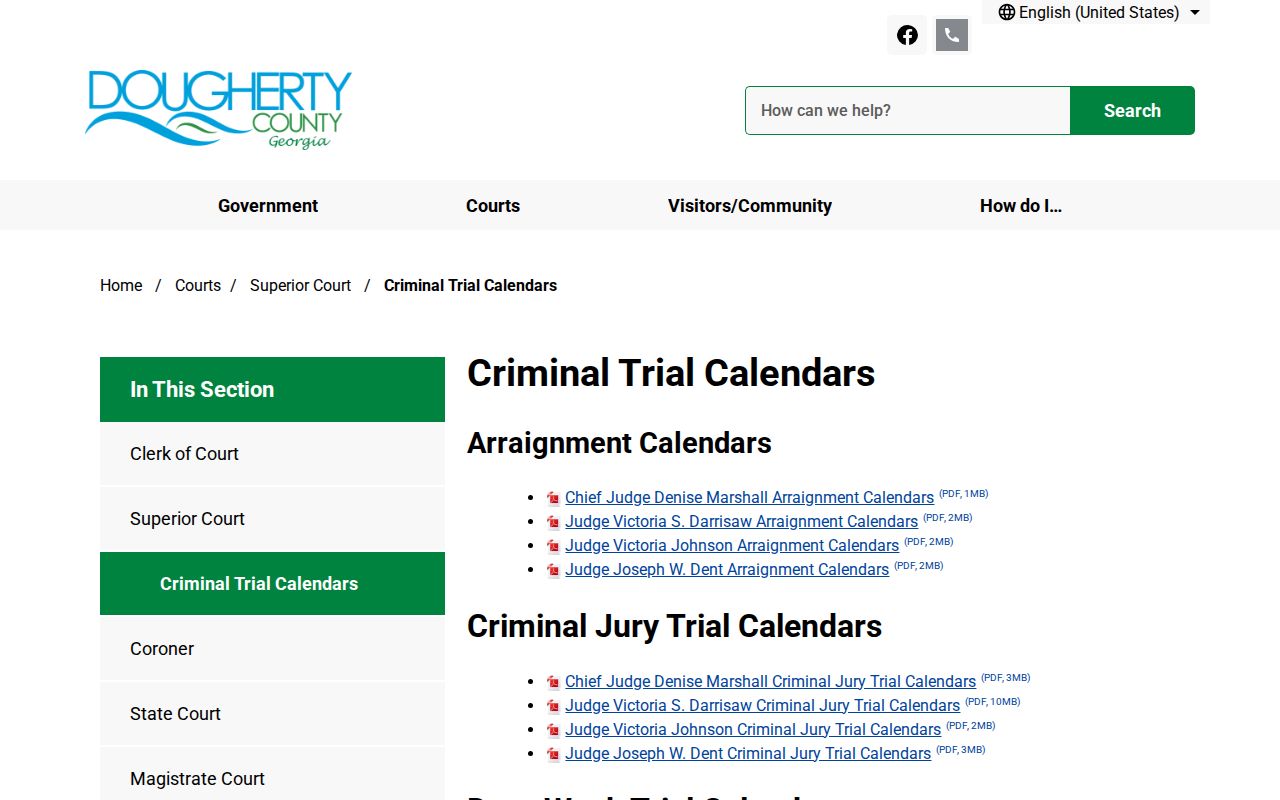
The redacted calendar view comes from the county criminal-calendar PDF source and shows field labels rather than party data. Match the case number to the current Proceedings entry. For any setting that changed or has passed, confirm with the court.
Which Court Holds Criminal Dockets
Felony charges in Dougherty County travel through Superior Court's R division. State Court takes SR Misdemeanor, SW Misdemeanor Warrants, and ST Traffic. Magistrate Court issues criminal warrants, holds committal hearings, and manages misdemeanor citations plus probation-related divisions. Inside the city, Albany Municipal Court hears ordinance misdemeanors and state traffic tickets. It keeps them in its own system. Juvenile Court covers delinquency, dependency, treatment, and juvenile traffic. Access there is restricted.
So search by court. Don't go by the alleged conduct alone. A warrant can start in Magistrate or State and later tie to a Superior matter. A municipal ticket may never enter Tyler at all. Federal criminal cases belong to PACER and the Middle District clerk. Let the county court map set your next step in any docket search.
Dougherty County Criminal Warrant Routes
The Tyler division menu splits things out. You get Superior warrants, dismissed warrants, search warrants, State misdemeanor warrants, and Magistrate criminal processes. Treat a division name as a routing label only. It does not tell you a warrant was issued, served, dismissed, or active. When status matters to a current setting, read the case view. Ask the issuing court directly.
Common names return broad results fast. Narrow the query with court code, division, date range, or status. If the portal answers "Please narrow your search results and try again," do just that. The Clerk's line can handle a navigation question. Warrant and hearing decisions rest with the issuing court. State Court lists criminal coordinator Tracie Bennett at 229-431-2152. For Superior calendar questions, use the judge-specific page or the Clerk at 229-431-2198. Magistrate questions go to 229-431-3216.
Public Access and Sealed Criminal Dockets
Public access never means the whole criminal file. Juvenile delinquency, dependency, unruly, and treatment records sit outside ordinary adult searches. Search-warrant material, sealed pleadings, in-camera evidence, and protected identifiers may be missing or masked. So may anything restricted by court order. A Tyler case number, or a Proceedings row, is no promise of access. The document behind View may not be open to you. Uniform Superior Court Rule 21 sets the public-access presumption for Superior records. Rules 21.1 through 21.6 cover restriction and protected information. The Georgia Open Records Act, O.C.G.A. § 50-18-70 et seq., cannot replace the court's own record procedure.
For confidential juvenile matters, a separate custodian boundary applies. The official Dougherty Juvenile Court page explains how that court handles them.
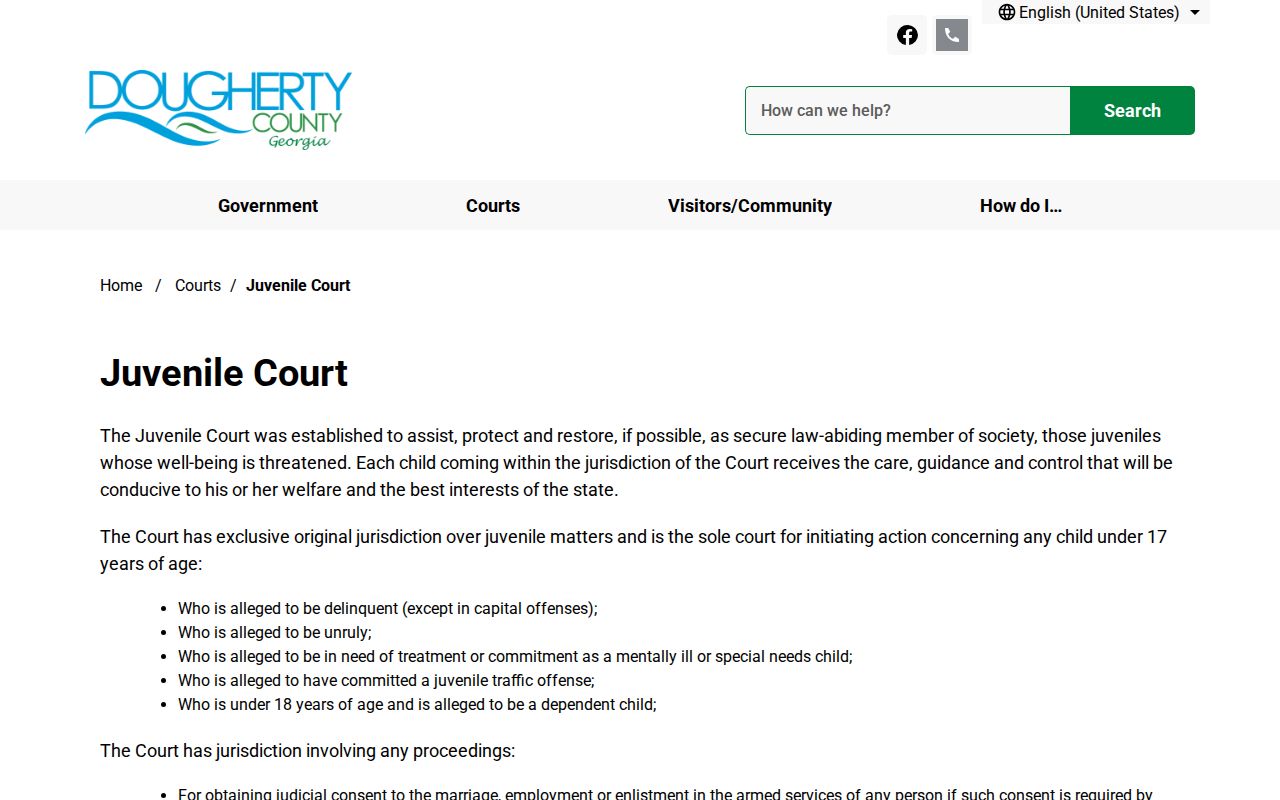
A missing criminal result has several possible causes: wrong court, restricted file, paper archive, or simply no match. Confirm which court holds custody before drawing any conclusion.
Dougherty County Criminal Case Fallbacks
Start with the basics. Check spelling, court code, division, case number, and status. Then ask where the item actually sits. It may be in Magistrate, Probate, Juvenile, Albany Municipal, or federal court. If the case shows in Tyler but a document does not, use PeachCourt when authorized. You can also call the Clerk, visit Suite 126, or make a narrow request for the exact event or order.
PeachCourt's county instructions let case parties file and download criminal documents at no cost. Non-parties pay the paper-copy rate for downloads. Older, sealed, or non-digitized matters may still need the Clerk. Keep the products straight, too. A transcript comes from the court reporter, and a calendar is only a schedule. Confirm any final disposition from the correct document itself.
Criminal record rule: Use the docket to locate a case and its events. Use the Clerk or court for the official document, current setting, certified copy, or access decision.